Shibari: The Art and Safety of Rope Play.
Rope has been used in Japanese bondage for centuries. It's called shibari — literally "to tie" — and it's not just restraint. It's an art form. The rope itself becomes a language between partners: sensation, vulnerability, trust, and the visual beauty of knots against skin.
If you're curious about exploring rope, you're drawn to something real. The sensation of rope is entirely different from other forms of restraint. It's precise. Deliberate. It demands presence from both people involved.
Why rope matters.
There's something about rope that creates a particular kind of power exchange. The person tying has control and intention. The person being tied has surrendered to that intention, which paradoxically creates a profound sense of safety — if it's done right. The rope itself creates a continuous conversation between your bodies: pressure, circulation, nerve sensation.
Rope also has an aesthetic that matters. The knots, the patterns, the way rope sits on skin — it's beautiful in a way that other restraints often aren't. Some people are as drawn to the visual as they are to the physical sensation. If that visual is the draw and you're not ready to learn actual rope technique yet, harness-style bondage lingerie gives you a version of that aesthetic instantly — no knots required.
The safety you need to know.
Here's what people don't think about until it's too late: rope affects blood pressure and nerve function. If you're doing anything beyond light bondage — especially full-body suspension — you need to understand circulation.
Never tie around the neck. Never restrict breathing. Never leave someone tied and unattended. These aren't suggestions.
If someone is suspended or heavily bound, you can lose feeling in limbs faster than you'd expect. Nerve damage from rope is real and can be permanent. This is why you need safety scissors — the kind that have a rounded tip so you can cut rope quickly without cutting skin. Some people in the rope community carry emergency seat belt cutters, which can get someone out of multiple loops in seconds.
Keep safety scissors within arm's reach. Always.
The rope itself matters.
Not all rope is created equal. Natural fiber rope — jute, hemp, cotton — feels better on skin and has better grip than synthetic. But it can also cause rope burn if you're moving against it without preparation. Synthetic rope is smoother but can generate heat with friction.
Whatever rope you choose, make sure it's clean. Wash it before the first use. Rope that's been sitting in a hardware store or attic collects dust and debris that can irritate skin.
If rope play is something you're interested in exploring locally, we carry the right rope — the kind that's soft enough not to damage skin, strong enough to actually hold, and designed for this specific purpose. We also carry safety scissors and other gear that supports rope play safely.
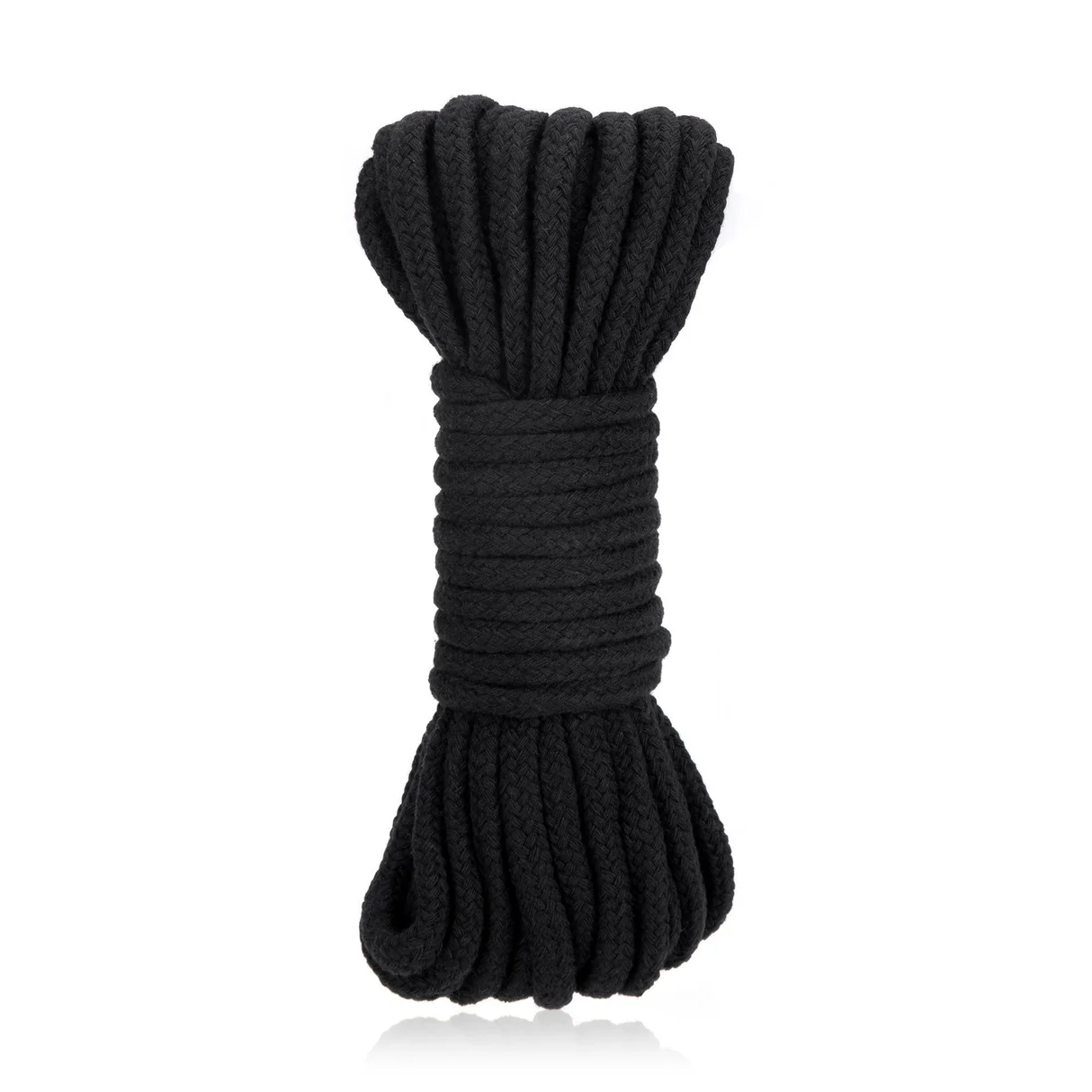
This is the rope we mean: 10 meters of soft cotton, long enough for simple wrist and ankle ties or something more ambitious like a hogtie, without the rope burn cheap synthetic cord causes.
Learn the knots properly.
This is non-negotiable: if you're going to tie someone up, you need to actually know what you're doing. YouTube tutorials are not enough. Find a class — a real one, taught by someone experienced in rope. It's worth the investment. Our own Know Your Ropes course covers exactly this — six modules on the history and culture of rope, choosing and caring for supplies, five essential knots taught step by step, and how to communicate with and care for your partner throughout. No experience required, just curiosity.
The Boy Scouts knew something: knot knowledge matters. A poorly tied knot can slip. A knot tied in the wrong place can cut off circulation. Learning proper technique isn't boring — it's the difference between a good experience and someone ending up in the emergency room.
Start small. Check in constantly.
Your first rope experience doesn't need to be elaborate. Light bondage on the wrists or ankles, with safety scissors right there, lets you both learn how your bodies respond to rope without high stakes.
Check in during: "How's your circulation? Any numbness? Any tingling?" These sensations tell you whether the rope is positioned right or if you need to loosen it.
Check in after: "Where did you feel it? What surprised you? Any numbness that didn't go away?" Nerve damage sometimes takes a few hours to become apparent.
The point.
Rope is intimate because it requires skill, attention, and trust. It's beautiful because it's intentional. It's safe because you respect what it can do to a body and you prepare accordingly.
If rope is calling to you, honor that. Learn it properly. Get the right materials. And create the kind of scene where both of you can actually relax into the experience instead of worrying about what might go wrong.
That's shibari done right.
related reading: