The Manuscript She Burned:
The Remarkable Story of The Perfumed Garden
On the morning of October 19, 1890, Isabel Burton sat in her home in Trieste and made a decision she would spend the rest of her life explaining.
Her husband, Sir Richard Francis Burton — explorer, linguist, diplomat, one of the most extraordinary minds of the Victorian era — had died the day before. He had spent the last years of his life working on a translation he considered his masterpiece: an expanded English edition of a fifteenth-century Arabic text called The Perfumed Garden of Sensual Delight, by the Tunisian scholar Muhammad al-Nafzawi.
He had finished it the day he died.
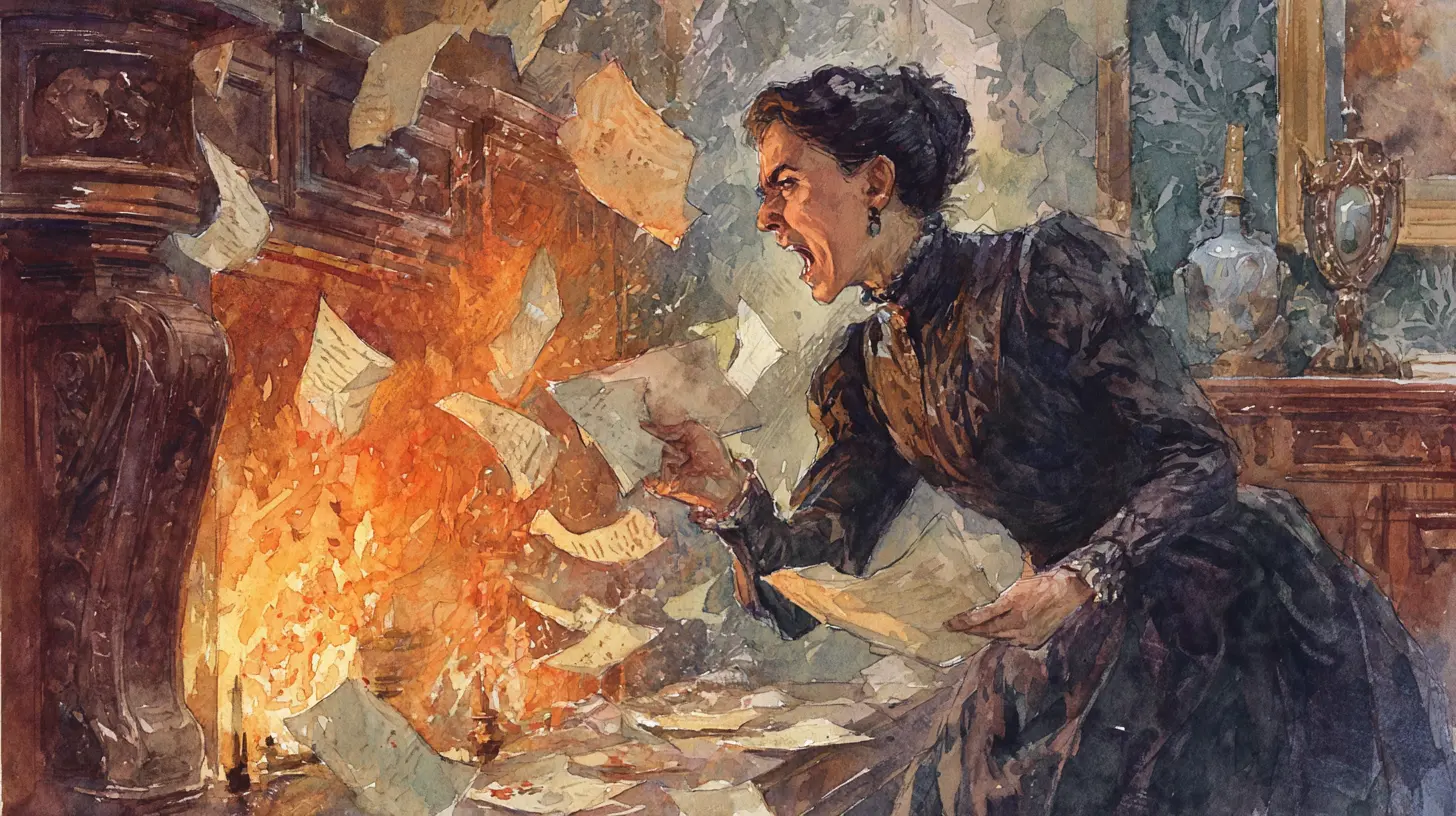
Isabel read it. Then she burned it.
With it went a chapter that existed in no other known copy anywhere in the world — a chapter Burton himself had called the crown of the entire work. It has never been recovered. It is simply gone.
What survived is still one of the most remarkable texts in the history of human intimacy.
What The Perfumed Garden Is
Muhammad al-Nafzawi wrote The Perfumed Garden in Arabic sometime in the fifteenth century, most likely in Tunisia. Like the Kama Sutra before it, it sits at the intersection of philosophy and instruction — a text that treats desire as a serious subject worthy of careful, generous attention.
It is warm in a way that surprises modern readers. Al-Nafzawi writes about physical intimacy with frankness and without shame, but the deeper current running through the text is one of genuine celebration — of pleasure as one of the real gifts of a human life, of the body as something to be honored rather than managed, of the connection between two people as something sacred enough to think carefully about.
He writes about attentiveness. About humor — there is genuine wit in the Perfumed Garden that catches you off guard. About the importance of understanding your partner's experience as fully as your own. About the kind of presence that makes another person feel truly met.
For a text written six hundred years ago it reads, in the best moments, like something written last week by someone who had been paying very close attention to what human beings actually need from each other.
The Man Who Found It
Sir Richard Francis Burton was not a man who did things quietly. He spoke 29 languages. He had traveled disguised through Mecca at a time when discovery would have meant death. He had explored the source of the Nile, translated the Arabian Nights into English, and managed to offend virtually every respectable institution in Victorian society at least once.
He had also, with his collaborator Forster Fitzgerald Arbuthnot, already given English readers the Kama Sutra in 1883 — privately published, carefully distributed, enormously influential.
The Perfumed Garden came to him through a French military officer named Lisfranc de Saint-Martin, who had discovered a manuscript of it in Algeria around 1850 and produced a French translation that circulated quietly among scholars. Burton encountered it, recognized what it was, and set to work.
He spent years on it. The expanded edition he was working on at his death went far beyond the existing French translation — he had found additional source material, including that final chapter, which dealt with what Burton described as a dimension of human sexuality that no other version of the text contained.
He finished the translation on October 18, 1890. He died the following morning.
The Fire
Isabel Burton was not a villain. She was a woman of deep faith, enormous loyalty, and genuine love for a husband whose work had always made her uncomfortable. She had tolerated — sometimes championed — his translations of texts that Victorian society found scandalous. She had spent decades defending him to a world that found him excessive.
But sitting alone with the completed manuscript the day after his death, she made the calculation that has been made countless times across human history when desire and knowledge collide with fear: she decided the world was better off without it.
She burned 1,500 pages of manuscript. She burned his journals. She burned correspondence. And she burned that final chapter — the one Burton believed was the crown of everything he had worked toward in those last years.
Then she wrote a memoir defending the decision. She never fully stopped defending it.
What she did not understand — what the people who have made this calculation across centuries never seem to understand — is that you cannot burn an idea. You can destroy a manuscript. You cannot destroy the human experience that manuscript was describing. It goes on existing whether or not the words survive.
What Survived Anyway
The version of The Perfumed Garden that exists today is an earlier, incomplete translation — the one Burton had already circulated before he began the expanded work. It is missing that final chapter. It will always be missing that final chapter.
And it is still extraordinary.
What survived the fire is a text that has been in print, in various editions, for over a century. It has been read by people who found in it something they couldn't find anywhere else — a voice from six hundred years ago that talked about desire with warmth and intelligence and without shame. A reminder that the conversation we think of as modern and difficult and fraught has been going on for as long as human beings have been loving each other.
Isabel Burton was trying to protect her husband's legacy. What she actually did was write herself into the history of every text that has ever been suppressed in the name of protecting people from knowledge they were perfectly capable of handling.
The Perfumed Garden outlasted her too.
Why It Matters Now
Every text in this series has a suppression story. Ovid exiled. The Kama Sutra mistranslated into something safer. The Ananga Ranga largely ignored for centuries. And The Perfumed Garden, most dramatically, partially burned by a grieving widow who couldn't let it exist.
The pattern is not a coincidence. Sexual wisdom has always made people in power uncomfortable, because it belongs to the people who have bodies — which is everyone — rather than to the institutions that prefer to regulate what those people do with them.
The wisdom keeps surviving anyway. It gets written down, suppressed, lost, found, burned, reprinted, misread, and found again. Because the questions it answers don't go away. Because human beings keep needing to know how to love each other well, and keep being grateful when someone has thought carefully about it and written it down.
That is the tradition Romantic Adventures is part of. Not the suppression. The survival.
Part of our History of Sexual Wisdom series.
Related Reading
- The Ancient Art of Loving: A History of Sexual Wisdom
- What the Kama Sutra Actually Says (And What Got Left Out)
- The Poet Who Got Exiled for Writing About Love
- The 500-Year-Old Manual for Keeping Long Marriages Passionate
- The One Thing We Can't Sell You
- What the Research Actually Says About Sexual Wellness in America